In Praise of Higher Education

images

Semester Abroad; Oxford, England; Thursday night, the Bulldog Pub’s karaoke night; slightly more than halfway through our summer, 1994 term.

It was hot, the hottest summer in England in nearly one hundred years. My white Gap 100% cotton t-shirt stuck to my back. My curly blonde hair was pulled up in a jagged-toothed hair clip. I held a warm shandy while my friend Jon slouched nearby in relaxed Levis and a yellow t-shirt, clutching a pint of tepid Guinness, which was rumored to be nearly 10% alcohol in those days (which might explain why we did some of the things we did).

We had been going to the Bulldog for a while, every week as regular as a sunrise, to avoid writing papers and to plan our weekend breaks to London and Paris, while listening to backpack-clutching, disaffected Euro-youth sing “Love is All Around” and the Big Mountain version of “Baby I Love Your Way.” I don’t remember how we chose the Bulldog; we just seemed to have drifted there one night and stayed. I don’t even know why we did. The pub was stiflingly airless; the floor was sticky; the Euro-youth were doing their best to destroy our inner ears with their caterwauling; yet we wandered in every Thursday night.

One night, at Jon’s signal, Stephanie Tinley and I pushed through the side door to the relative cool of the alley to hear Jon announcing to the rest of our classmates that we could no longer observe the howling karaoke; we had to participate.

After registering our disbelieving stares, he explained that we needed to express our Americanness, our very New Yorkness, to the European pub rats. Although no one had yet agreed with him, he outlined his idea. Musically-speaking, nothing says America better than Motown and nothing says New York like the Village People. Motown, okay, but the Village People?  On one level I understood his analogy: Motown does say funky, talented, high-achieving America and the Village People do say New York – specifically Greenwich Village, where we had all met at New York University – however they said it in a language I wasn’t sure I wanted to shout out in a pub.

It took some cajoling, but eventually Stephanie and I agreed to sing – and spell out while dancing – the disco hit “YMCA,” although privately I wondered just how drunk I would have to be to actually climb onto a stage and sing in public. Jon and some other classmates, David and Mikael, decided to be the Pips while Clydette sang Gladys Knight’s part on “Midnight Train to Georgia.” The plan was good as far as it went, however, in those days before Ipods, the Internet, and downloaded music, to do this adequately, one of us needed to have either a phenomenal memory for lyrics and tunes or a Sony Discman and a compact disc of the songs.  Fortunately, I had a Discman back in my room and at the time there was an HMV music store on Cornmarket Street, so the next afternoon after lunch and before tutorials, Jon and I bought the necessary CDs.

We began rehearsing that evening. It was truly idiotic for Stephanie and me. We giggled, we overacted, and we fell onto my bed in hysterical tears. The problem wasn’t just that the song was stupid: we were both spectacularly untalented. Regardless, we kept at it. The days passed and, caught up in our own performance, plus all the academic work Trinity College appeared to believe that we should complete, we didn’t discuss it with the others again until after dinner the Wednesday before our performance.

“Are you guys ready?” Jon asked as we sat on a bench outside the Junior Common Room watching the sun streak across the evening sky.

“Yes,” I answered, glancing at Steph who nodded in agreement.

His eyes went from my face to hers. “Are you sure?” he asked with a trace of disbelief in his tone.

Steph answered this time. “Yeah, we’re sure.”

“We aren’t very good,” I interjected as she frowned at me.

“Hmmmm. ‘Not very good’ in what sense? ‘Not very good’ because you didn’t practice enough?” Jon asked snarkily.

“No, ‘not very good’ because we have no performing talent,” I snapped.

He waved a hand airily. “Oh, that doesn’t matter.”

Easy for him to say, I thought.

fullsizerender

Oxford, England; another Thursday night; the Bulldog Pub’s karaoke night, two weeks before our summer term ends.

All of the regulars were there on the sweltering evening Jon chose for our musical debut. I was nervous and needed a shandy. Hell, I needed two. I am an English major, for crying out loud; I am happiest curled on a sofa reading from books, not standing on rickety pub stages following lyrics along a teleprompter screen. Evidently I was not the only performer in need of lukewarm liquid courage; Jon was on his third pint. One of the regulars, a skinny, shaven-head, gap-toothed guy in Levis, a combat jacket, and Doc Martens, looking like a National Front organizer, decided to honor the American visitors by performing “New York, New York.” Doing his best Sid Vicious imitation, he snarled his way through the poor, tortured song. Finally, mercifully, done, he winked at Stephanie and me, then lifted his pint from a wooden ledge, and, toasting us, drained it.

We were next. The trumpet intro of our disco number blared. Too drunk and way too frightened to find the stage, Stephanie and I climbed onto the nearest table and began shaking our little Wonder-bra’d breasts and shouting “Young man! There’s no need to feel down. I said, young man! When you’re in a new town.”

I could see Jon in the back of the pub nearly spray out his Guinness at the sight. (Later he observed that we resembled nothing so much as two crack-crazed cheerleaders.) We formed the YMCA letters over our heads, thrust our pelvises, and shouted the lyrics. Thankfully for all concerned, it ended pretty quickly.

Jon, Mikael, and David climbed onto the stage followed by Clydette. Their performance was breathtaking. While Steph and I looked exactly like what we were – half-drunk, frightened young women – the four of them make singing in a pub look natural, like it was something they did every day of their lives, as though they just happened into the Bulldog on their tour of Oxfordshire. While Clydette wailed (unlike Steph and me, she really could sing), Jon and the other Pips shuffled their feet and spun in time and in unison, raising their arms into the air and mimicking pulling a train whistle for the “woo woo” part.

When they finished the crowd of Euro-youth cheered. We cheered. The bartender cheered. Even the National Front skinhead cheered. Later, when I learned that the intricate choreography had been Jon’s idea, I wasn’t surprised. The Jon I knew always made an effort, always aimed high, always sought perfection; he never sat in the folding chairs on the sidelines and watched life pass in front of him.

It has been decades since that night – the Bulldog Pub has long since been gentrified and Jon has been dead for nearly twenty years – but I laugh whenever I am in a checkout line and hear “YMCA” playing. If I hear “Midnight Train to Georgia,” I cry.
Welcome to the Hotel California

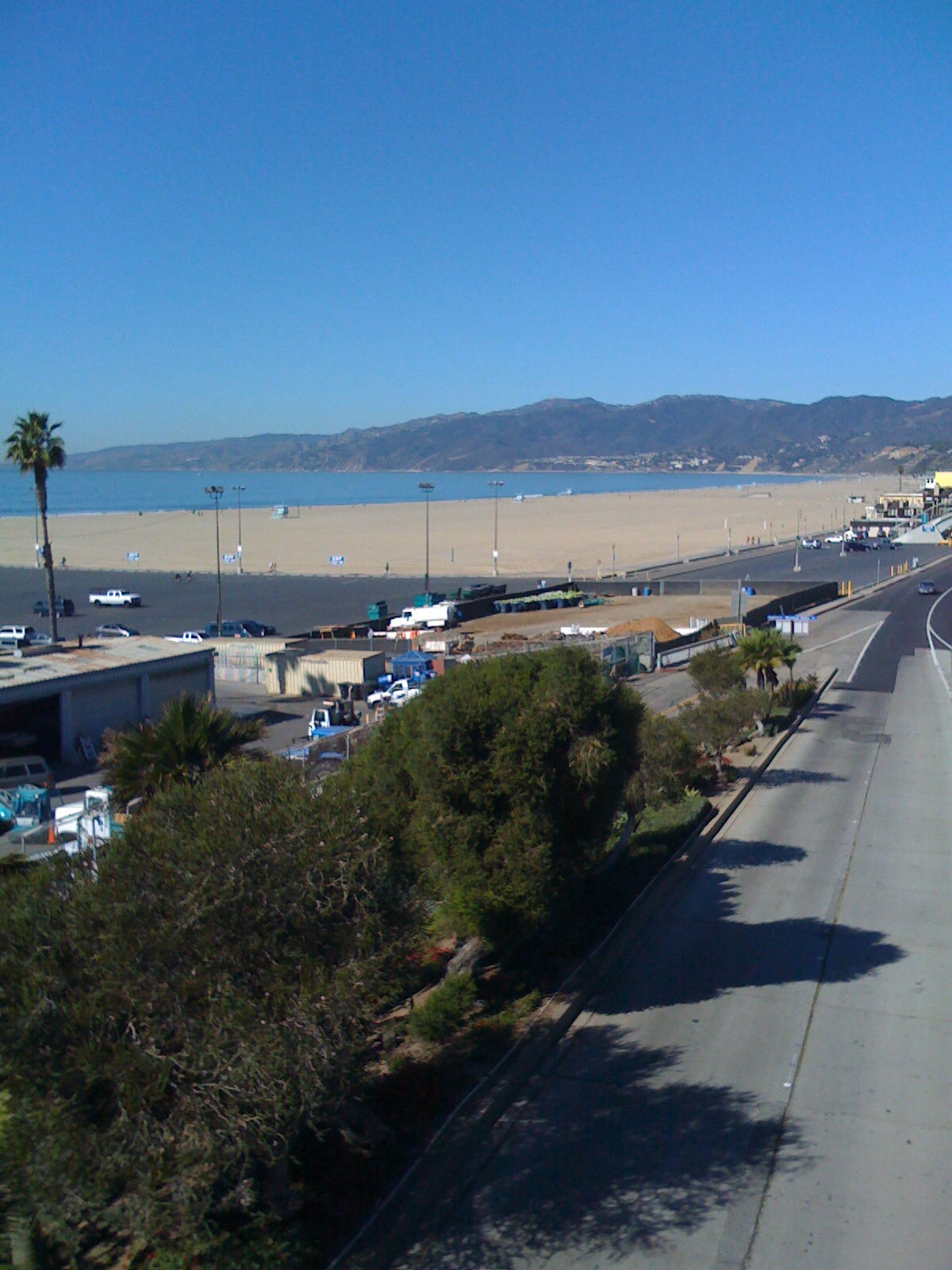
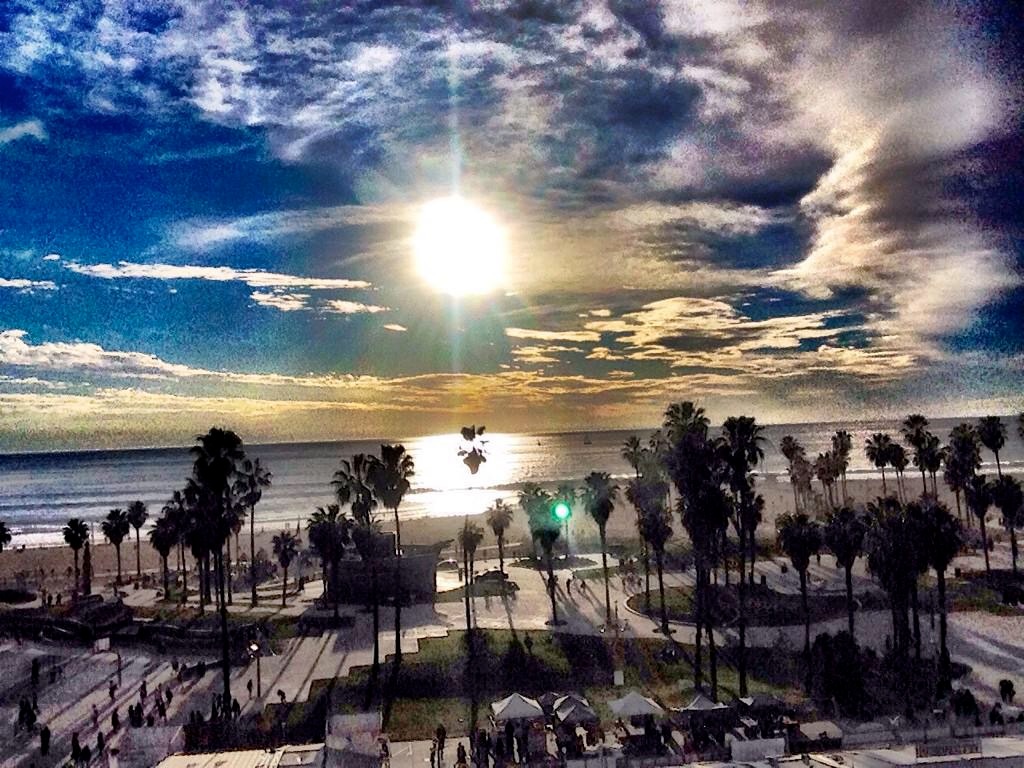
beverly_hills_hotel_facebookOur little house in Santa Monica wasn’t air-conditioned, so on the hot days, we would walk down the hill to the beach where there was always a breeze and the water was cool. Weekday afternoons after work were best because the beach was practically deserted then; the only sounds were crashing waves, shrieking gulls, and the occasional zzzzzzing of bicycle bells on the Strand, the paved path that runs from Will Rogers State Beach in the Palisades all the way south to Torrance. We would walk north toward the Pier then sit on the concrete wall bordering the beach to watch the sunset. The sand glowed gold for miles in the pink light while the plashing Pacific glittered at its edge. Palm trees cast their long, shaggy, grey shadows. I always found this experience restorative. Rarely was an afternoon so dreadful that a stroll along the seafront didn’t dispel the stress and gloom. By the time we were ready to trudge up the hill for dinner, the sun had set and the breeze had picked up.

The heat had been oppressive during the week before our twenty-third wedding anniversary. For hours we sat on the front porch in the evening after our beach walks, eating ice cream and trying to decide what to do to celebrate.   I wanted to go away for the weekend but Jamie was too busy at the studio so we tried to devise a day trip or some other out-of-the ordinary event that would be special and fun, but not take us too far. Despite batting ideas around like two cats with a wiffle ball, we never came up with anything we both liked and eventually we ceased discussing it.

The Saturday of our anniversary I awoke at dawn feeling damp and queasy. The house was silent; Jamie was still asleep, although Spencer opened an eye to watch me. I pushed my bangs from my damp forehead. Despite all of the windows being open, the air was still, making the room stuffy, and I could feel a thin sheen of sweat glistening on my body. The room was really hot. If it weren’t a weekend, it would have been a terrific beach day.

I slid out of bed and padded downstairs in my skimpy, cotton nightgown, Spencer at my heels. After pulling open the heavy oak door, I read the thermometer affixed to the wall and was surprised that the temperature outside was already 87. That didn’t bode well. If our house was a pizza oven now, the Valley must be a sauna. That meant that all roads in and around Santa Monica and the beach itself would be packed with day-trippers seeking relief from the sweltering heat. I doubted any would be forthcoming, anyway, on a day like today: since we lived only three blocks from the beach, we could usually feel the breezes flurrying up the spine of the walkstreet and this morning there were none.

I sat on the top step and pulled my hair up and tied it in a messy knot wondering how to spend today. I doubted we would be doing anything special since we hadn’t managed to agree on what to do. The walkstreet was silent. The fronds on Jean-Pierre’s palm trees hung motionless in the still air. No one was moving except Spencer and Simone, the neighbor’s cat. I peeled my bare legs from the gritty step and wandered back into the house to flip the coffee pot switch. No matter how hot the day, I needed my steaming morning caffeine.

Balancing the mug on my Kindle, I returned to the porch to read the LA Times. By the time Jamie awoke, I was pretty much through all of the stories that interested me.

“Jeez,” he said, leaning against the doorjamb in baggy khaki shorts. “It’s gruesome out here.”

“Want to go to the beach?” I asked, already knowing the answer. Jamie hated crowded beaches.

“Hell, no. It’ll be packed with all the Valley people. Why they don’t just swim in their pools I’ll never know.”

“So what should we do? I hate to waste a perfectly good Saturday. And it is our anniversary so we should do something special, something memorable.”

Jamie pulled his left hand through his tousled hair. “Well, I have to pick up shirts at the laundry and your dress at the dry cleaner.”

“And after the thrill of running errands has passed?”

He shrugged. “I don’t know. Maybe we’ll go out for dinner. Let’s see later.” He retreated upstairs toward the bathroom to shower.

“I want to do something fun!” I shouted after him. I sighed. Anniversaries were always bigger deals to me than to him.

I was still reading on the porch when he returned talking on his cell phone. He kissed my ear and trotted down the stairs, disappearing over the rise of the sidewalk.

Figuring it would be nice if I didn’t sit around in my pajamas all day, I hoisted myself up from the porch swing and started up the stairs to shower, but the heat immediately drained me of all energy so instead I flopped on the bed, picked up my Kindle, and read some more. When Jamie returned a little over an hour later, I was still lying on the damp and rumpled sheets engrossed in my novel.

“Hey, I know what we should do today,” he said, pulling the plastic wrapping from my black cocktail dress and hanging it in the closet. “And it’s something special. Let’s go to the Beverly Hills Hotel. We can get a room, hang out at the pool, have dinner in the Polo Lounge, and not have to deal with the traffic or the heat.” I stared at him until he added “And celebrate our anniversary.”

I considered; while it sounded like fun, it would certainly be an expensive twenty-four hours just to avoid sweating on the beach with families from Studio City. But it wasn’t just for that; it was for our wedding anniversary. It would be romantic, like a miniature second honeymoon. Actually, the Beverly Hills Hotel had always reminded me of the Royal Hawaiian on Waikiki Beach where we had honeymooned all those years ago. “Okay.” I stood. “And while I’m in the shower, you can go next door and ask Debbie to babysit Spencer.”

Within an hour we were standing in the lobby of the iconic hotel, cool, filtered air flowing enthusiastically around us. Jamie handed his American Express card to the desk clerk and I rubbed my hands together and gazed at the famous Don Loper-designed banana leaf wallpaper covering the wall leading to the stairs. “Whoa, it’s actually chilly in here,” I said.

The clerk heard me. “You folks from out of town? From someplace hot?”

I giggled. “Yeah, Santa Monica.”

His eyes widened. “No way. You came ten miles to Beverly Hills when you live by the beach?”

“It’s unbearably hot there today and we live in a turn-of-the-century beach bungalow with no air conditioning, so, yeah, we came ten miles.” I grinned.

He smiled back displaying his perfectly even, perfectly white teeth. “I guess you won’t be wanting the Visitors’ Guide to Beverly Hills then.”

“No, thanks.”

Our room was lovely and cool, but we were eager to relax by the pool, to read and have a snack, so Jamie unpacked quickly, tossing our few clothes into a couple of dresser drawers. We changed into our swimwear and headed downstairs.

The pool area was bright and sunny, perfect for soaking up local color. We chose lounges near the restaurant because I like to people-watch and there is always a lot to see in Beverly Hills. One common sight that never failed to amuse me was a woman wearing a swimsuit and 6-inch Jimmy Choo stilettos carrying her $15,000 alligator Birken to sit by a pool. I wasn’t disappointed; there were four of them.

After we’d been roasting for a few hours, watching the sun descend over the stately palms and the pink stucco walls, Jamie suggested we return to our room to shower and dress for dinner.   Hand-in-hand we wandered up the sloped and curving path, dipping our heads under low-hanging giant bird-of-paradise leaves, until we reached the elevator.

Back in our cool room, I watched the television news while Jamie showered, then he took my place on the sofa to wait while I did. I had just squeezed my eyes shut, squirted shampoo into my hair, and begun to lather when I sensed that something had changed. I couldn’t hear the television anymore. The gusty sound of air conditioning billowing softly into the room from the large vents seemed to have stopped, as well. Rinsing my hair and face, I opened my eyes. The bathroom was shrouded in darkness.

“Jame!” I called. “It’s dark in here. What’s going on?” No answer. “Jame?” Just as I finished wrapping my hair in a towel in preparation for climbing out of the tub, I heard the door latch. “Jamie! What’s going on?”

The bathroom door opened and he entered. No light followed him. “I don’t know. The emergency lights are on in the hall. The power seems to be off on this entire floor.”

I shrugged into a robe and we felt our way through the furniture to the balcony and slid open the thick glass door. Everything outside was black. “Listen,” Jamie said. “You can hear the traffic sounds.” He was right. The night was so eerily quiet that we could hear the whoosh of the cars on Mulholland and Sunset.

“Geez, it’s like the aliens landed,” I observed tying the sash of the terrycloth robe. “What do you think is going on?”

Jamie shrugged.

“Do the phones work when the power’s off?” I asked.

“Oh, sure. They have enormous generators here.”

“So call the front desk and ask,” I suggested.

Jamie stared at me. “You mean now, along with the other four hundred people who are in this hotel tonight?”

I stared back. “Yes, unless you want to be the only one out of four hundred and two people who don’t know what’s going on.”

He lifted a brow. “I won’t be the only one; you don’t know, either.” Regardless, he felt his way to the phone and dialed the front desk; amazingly enough, someone answered. Evidently, there had been a serious traffic accident in Beverly Hills and a car had hit a power pole. The power would be out for hours, probably throughout the night.   Of course, the hotel had generators but not enough power to run all of its functions. Unfortunately, one of the biggest drains on electricity was the air conditioning; that had to be sacrificed, however the management foresaw no problems as a cool night was forecast and they had plenty of fans. Would we like one? If we did, one would be sent to our room, along with extra flashlights. No, regrettably the Polo Lounge would not be honoring our dinner reservation this evening as the emergency had forced its early closure.

I sat on the carpet and listened as Jamie relayed this to me. “Doesn’t this room cost a boatload of money?” I asked.

He nodded. “A boat and a half,” he agreed.

“Well, that must be the definition of irony, then. Spending a zillion dollars to find ourselves in the same situation we were in earlier today in Santa Monica for free.”

“Not really the same,” he said. “We still had power in Santa Monica.”

I burst into laughter and rolled over onto the carpet.

“Okay,” I gasped, “so we are extravagant idiots. Whatever. It’s done now. We’re here. The current question is what next? We need to find somewhere for dinner. I’m starving.”

“Well, since there’s no Polo Lounge, where do you want to eat?

“Wherever you want is fine.”

Jamie shrugged then thought for a moment. “Pink’s?” he suggested.

I considered briefly. This night wasn’t going to go the way I had expected, anyway. My fantasy of a romantic stay in a fabled Southern California hotel with rich furnishings and endless amenities seemed a lot less likely now with the reality of whirring fans, no dinner, and a pocket flashlight to find our way along the corridors. Why not complete the evening by sitting in plastic lawn chairs and eating chili dogs in the dark on La Brea Avenue?

“Sure, why not?” As I pushed myself up from the thick carpet a lock of damp hair slapped the side of my face. “Let me just . . . oh, you know what? Without electricity I can’t dry my hair.”

“So?”

“So by tomorrow morning I am going to look like Little Orphan Annie with a magnesium deficiency.”

Jamie shrugged. “We’ll check out early. No one will see you.”

I scowled. “Thanks. You might have said I’ll be beautiful anyway.”

“I might have,” he agreed, holding out his hands to help me rise.

I grabbed both of his hands. “That’s why I married you, you know, twenty-three years ago today. Your undying romanticism. Besides, I knew you’d be the kind of man who’d buy me a chili dog for dinner, then take me camping at a fancy Beverly Hills hotel with no electricity.”

“Glad to hear it. Then you’re not disappointed with the result. Happy Anniversary.” He kissed my damp forehead. “Come on, get dressed. I don’t want to have to spend the rest of the night standing in line behind the tour bus from Rancho Cucamonga just to get a hot dog.”

“Oh, sure, like tourists from Rancho Cucamonga drive all the way to La Brea at this time of night,” I scoffed as I pulled a white t shirt over my wet hair.

“No, they are there. I went for lunch one day and the line was down the block.”

“I think that was because it was lunchtime. It’s . . .,” I glanced at my watch on the bedside table “after nine. Ohhhh, hey, how late is Pink’s open, anyway?”

“Three a.m, on a Saturday.”

I grabbed his arm and propelled him toward the door. “Oh, honey, come on. Let’s get going. I want you to have plenty of time to make friends with all those tourists in line.”

To London, To London

photo“The whole thing is actually tremendously exciting. Not just getting on the plane, but getting on the plane and turning left.”

Jean Ainslie, The Best Exotic Marigold Hotel

 Jean Ainslie, the wife of a retired civil servant in The Best Exotic Marigold Hotel is correct; when entering a jumbo jet, turning left into First Class is a lot more fun than turning right and bumping your carry-on along the rows until you reach a tiny Economy seat. In First Class the vacation begins with the journey, not with the retrieval of your suitcase at the destination’s baggage carousel.

Because Jamie flew back and forth from New York to Los Angeles so often, he had surpassed Frequent Flyer status; he was more like Constant Flyer. In addition to the weekly cross-country trips, he also consulted with other studios in Michigan, New Mexico, London, and Dubai. His millions – literally – of air miles ensured that every vacation we planned began with our entering the plane and turning left.

Jamie had been working with some executives at a studio in England just before the Presidents Day holiday, so he suggested I join him in London for a four-day weekend. He booked me on British Airways’ Friday night flight from JFK to Heathrow at the same time he made his own reservations from LAX. I was looking forward to the entire trip. Not only would I be in London – one of my favorite cities – but also I would be carried there by my favorite airline.

I like BA’s transatlantic service so much that I would happily do commercials for it. The evening begins with a freshly prepared dinner in the white-liveried restaurant section of the modern airport lounge, followed by an escort to the gate. Once in flight, the attendants offer food, beverages, DVD players, magazines, cotton sleeping suits, shoe bags, and a pillow-top mattress cover during the turndown service when your large seat becomes a decent-sized flat bed. The staff is genuinely friendly and dedicated. It’s like checking into a flying 5 star hotel. Odd as it sounds, I was at least as excited to spend the night in the plane as I was to check in to the Connaught the next morning.

I knew I would enjoy every minute of this mini-vacation. Not only is London full of great memories – when I was at Oxford, my classmates and I took the train down nearly every weekend to shop, eat at world-class restaurants, and see West End shows – but it is cosmopolitan and sophisticated with seemingly millions of things to see and do. This trip promised to be even more fun than usual because we were scheduled to see old friends from New York who had relocated to Surrey.

On the evening I was scheduled to leave, I was bustling around, finishing my last minute packing when the phone rang. It was a representative from BA. In crisp Received Pronunciation, she apologized profusely then informed me that due to unscheduled but required maintenance, my flight was going to be delayed; she asked whether I’d like to be moved to the earlier flight. I explained that delays didn’t bother me as I had nowhere to go and nothing to do because this trip was a mini-break for me, not a business trip. After disconnecting, I kissed the cat and the dog goodbye, checked the instructions for the pet sitter one last time, and tossed my rollerboard in the car. For once, the traffic wasn’t hellacious and in no time I was checking in at the BA counter.

“Good evening, Mrs. Cella,” the ticketing agent chirped. “I see that you have been informed that your plane will be delayed for an hour and a half and that you have chosen t remain on board this flight. Is that correct?”

I nodded.

She reached into a folder and pulled out a packet. “To thank you for your patience, we have a voucher for a complimentary massage at the spa upstairs.”

“A massage?” I asked incredulously.

“Yes, madam. Since we have inconvenienced you we’d like to make your wait a little nicer.”

“You didn’t inconvenience me. I wasn’t going anywhere on a schedule, anyway. I’m not travelling on business. I am going to meet my husband in London but he isn’t even there yet. Really, you aren’t inconveniencing me at all.”

“Thank you, madam; that is very kind of you to say so, but we at British Airways know you have a choice and want to earn your satisfied custom.”

I accepted the envelope in a daze. They had ensured my satisfaction by letting my husband collect enough bonus miles to allow us fly First Class. With the gate escort. With the pillow-top mattresses. With the freshly brewed Earl Grey tea and piping hot scones thick with Devon cream and ruby strawberry jam served on the plane. The massage was above and beyond. I was going to take it, of course, but it was still over the top.

I found my way to the spa, enjoyed my massage, and wandered back to the First Class Lounge for dinner. I read my book for a bit. Eventually the gate escort came for me. We bypassed the crowds, entered the plane, and turned left. The cabin was empty. There was no one there but a flight attendant. Hmm. Well, maybe I was the first to board. The flight attendant led me to my seat where I sat down, took off my shoes, and switched on the reading lamp. No one else entered the cabin. When the steward returned with my tea I asked where the other passengers were.

“I’m afraid that it’s just you tonight, madam,” he replied arranging my digestive biscuits artfully on a small plate.

“Just me? Why?”

“All of the other travelers chose to take the earlier flight after learning that this one was delayed.”

“Really?”

He nodded. “As a result, you have three attendants to grant your every wish this evening.”

“Wow. It’s like being one of the super-rich with my own plane,” I giggled.

He smiled as he spread his arms wide. “Whatever you desire,” he said.

I laughed. “Except I am afraid that you will be disappointed in me. I don’t desire anything except to go to sleep since it’s nearly midnight.”

“In that case, madam, I will procure your sleeping suit and make up your bed immediately. Then, however, I must leave you to help in the other two cabins since it is not really fair on the other attendants that I have so little work to do this evening. Regardless, if you need anything, just press that little button right there and I will return,”

“Oh, no problem, really. I will be asleep in no time.”

“Then I will take your breakfast order and leave you to it.”

So that’s what happened. I changed into my BA-issue pajamas and fell asleep, waking only when the cabin lights began to shine slightly and the aroma of brewing tea danced around my nose.

After landing, I caught a taxi and met Jamie at the hotel on Carlos Place in Mayfair. The flight had been such a non-adventure that it became an adventure, something worth remembering. Departure had been delayed, it’s true, but it was handled so graciously that it caused no annoyance; there was no loss of anything, really, except for the irritation that generally accompanies such eventualities and who misses extra aggravation? I had had a great time from the moment my feet hit the carpeted departure lounge.

London was as wonderful as always. We shopped, ate well, and saw Carole and TR for the first time in several years. It was a delightfully uneventful weekend from start to finish. And that is why I remember it so fondly so many years late.

It’s Not Always Sunny in New York City

court

New York, New York. The city so nice they named it twice.

New York is a magical place to live. There are terrific universities, great restaurants, and every aspect of high and low culture anyone could ever want. Every day is an adventure, yet buried below all of the nice things that have happened to me while I grew up in New York are a few painful events, the memories of which fade but continue to leave marks, pale shadows like the ashy, circular, black burns a fire’s sparks leave on a hearth rug. In June 2015, it was eighteen years since I began the process of surviving the murder of my graduate school friend Jon.  Although at the time, I recognized the horror of the day, I didn’t realize immediately the ancillary ramifications of it.  The gunshot killed Jon but also much more.

On May 30, 1997, someone who wanted to rob Jon also chose to kill him; intentionally chose, first by torture and then by a gunshot to the base of the skull, presumably to stop him from reporting the crime. He knew his assailant; it wasn’t random street crime. Perhaps if it were it would make more sense.

No one learned of the event until a few days later when Jon failed to appear for work. And then, as they say, all Hell well and truly broke loose, because Jon’s father was famous. Within two weeks the perpetrators, hardly criminal masterminds, had been apprehended and relayed their side of the story to the NYPD and the newspapers, then, ultimately, the English-speaking world. The numbness, which had begun with the initial shock, began to recede like an ebb tide, leaving an amazingly large amount of room in my heart for pain.

In mid-July 1997 I attended a pretrial meeting at the Manhattan District Attorney’s office with Jon’s mother, Carol.  At one point, after Carol had gone to the ladies room, I naively asked the ADA whether she believed that they would secure a conviction because I would hate for my friend to have died for nothing.  “I have news for you,” she replied curtly, gathering her papers, “your friend died for nothing, anyway.”   Her observation shocked me at the time, although later I realized that it was true. I couldn’t have believed her on that sweaty July afternoon, though, because to do so would have left me unable to attend the trial that fall.

I remember entering Manhattan Criminal Court uncomfortably that cool October morning, scanning the public gallery for empty seats, and then pulling a little notebook from my handbag to scribble quick impressions so I could remember later what my senses were too overloaded to process.

We watched jury selection – twelve regulars and eight alternates (I wrote in my journal “are they expecting a high drop-out rate?”) and wondered what might really be learned about people from voir dire.  I remember hearing the judge advise the jury to “use the same methods you use in your everyday life to determine if someone is telling the truth” and wondering what exactly those methods might be.  The character analysis skills learned in English class didn’t seem to work in this room, especially since some in the jury pool (“Juror number 6 is trying to get off; says he’ll only be paid at work for 2 weeks so he can’t stay for 6”) didn’t care to determine anything at all.

Among the worst moments of the trial were hearing from the Medical Examiner (“one puncture in the back of the neck – three shallow cuts across the throat – one right side stab wound which hit the liver – one gunshot wound directly into the brain”) and seeing the autopsy photos passed around (according to my journal, “one of the jurors has her head between her knees . . . Carol’s face is red, now white. I think she’s about to pass out . . . Jamie’s left the room . . . M.E. doesn’t recognize the photo of Jon because by the time he saw him the body was so badly decomposed.”)

After this, the long misery of jurisprudence, the moment I had previously thought was the nadir of it all – the second I learned of Jon’s murder – faded nearly to nothingness when a jury of my peers found Corey Arthur – the assailant who was arrested wearing clothes smeared with Jon’s blood – guilty of only second degree murder which earned him a sentence of twenty-five years to life.  That day paled, too, later, when Corey’s accomplice, Montoun Hart, was acquitted.

Then it was over.  Except it wasn’t over.  It isn’t over.  Every May 6 is Jon’s birthday and every May 30 is the anniversary of his murder.  Every June 2 is a recreation of the day his decomposed body was found.

Shakespeare was right when he wrote that the evil men do lives after them. Evil’s residue continues to blow over everyone involved in this event like ash from an incinerator.  There is no escaping it.

The Most Over-Privileged English Teacher of All

2135057_88af57a97d1

Jamie’s job at the studio came with quite a few social, business, and political obligations. While they were always glamorous, they were usually not a lot of fun. Well, not a lot of fun for me. Jamie networked and schmoozed the room all night while I perched somewhere and watched the Beautiful People in their native habitat. People seldom spoke to me; I wasn’t in The Business, which made me all but invisible.

One night we went to Paramount Studios on Melrose Avenue in Hollywood for a fundraiser for a prominent Democratic presidential candidate. Dressed to kill in tux and cocktail dress, we left the walkstreet before it was even dark; these events always had astounding levels of security.

When we reached the lot, it appeared that half of Los Angeles County was attending this fifteen hundred dollar per plate dinner. Parking was a nightmare with everyone crowding their Mercedes, Bentleys, and Jags into the narrow Hollywood side streets lined with tiny bungalows and curious locals sitting on their front stoops eying us.

I was wearing five-inch stilettos and it was four blocks to the studio’s famous stucco gates. “Damn, they couldn’t provide a drive on pass for this,” I grumbled.

“Not at our donor level,” Jamie answered as he slowed his steps to match mine. “Besides, look at how many people are here. They’d all want one.”

“Are we all going to be in the same place?” I asked. “How big a stage are they using for this, anyway?”

Jamie shrugged. “I don’t know which stage we’re in; they’ll tell us inside at the reservation table, but all of these people aren’t going to be with us. You could get in the general lot party for two-fifty but no dinner, just entertainment, and maybe a movie star or two.”

“What’s the difference?” I answered. “Nobody ever eats at these things, anyway. Except me, I mean. I always wonder what happens to all of the uneaten food. What a waste.”

We’d finally come within sight of the studio; the Bronson Gates and the burbling fountain were right in front of us; behind it stood Security, the event entrance complete with beautiful young women as greeters, the gate itself, and finally, more Security.

We waited in line for a few minutes and, upon checking in, received tiny black and white clapper-shaped paper tickets with the Paramount logo and our names on them. I watched as other people received their tickets. They were all different shapes denoting which level party the holder was permitted to enter. That made it easy for Security to shepherd the visitors to the correct part of the lot for whatever level of entertainment their donation entitled them to attend.

Our dinner was in a stage on the other side of the lot, so we began the trek. On the way, Jamie saw lots of people he knew so the journey took a very long time, what with all that stopping and chatting. As I waited for him and wished for a studio golf cart to appear, I watched the lower-priced ticket holders turn toward the sets where their events were in full, raucous swing. There were snack booths with hot dogs and popcorn and kiosks selling bottles of water and soda and Paramount souvenirs. Gary Busey’s band was playing on the New York street.

When we finally reached the cavernous building where our dinner was, Jamie left me at the door. “There’s Hawk. I have to talk to him.” A peck on the cheek and he disappeared, sucked into the crowd like a genie returning to his bottle.

The soundstage was freezing so I pulled my pashmina across my shoulders and surveyed the room, watching the Great and Good of LA’s business, political, entertainment, and social worlds air-kiss and pretend to pay attention to one another while looking over each other’s shoulders in case someone more interesting or useful entered their orbit. I wandered about a bit, got a Perrier from an obsequious bartender, and pondered my seeming invisibility.

Finally, tired of my thin, Italian spike heels clacking on the cold concrete floor, I scouted what seemed to be a suitable table and sat down. Even though there was no seating chart, I knew Jamie would find me. He always had the scores of times we had done this.  I plopped my Timmy Woods Eiffel Tower evening bag on the table and waited.

A bustling woman in a sparkly lavender evening suit approached. Ignoring me, she began to spread purses, shawls, and documents at every seat around the table. When she got to me, she stopped and stared. Her expression fixed itself into a placating professional smile. I raised an eyebrow.

“Are you planning on sitting here?” she asked disingenuously.

“Yes.” I had rather thought my intentions were obvious.

“Oh. Well, we need a few more seats.”

“Hmm.”

“It’s for the agency personnel working on the campaign. We all need to sit together.” Ah. A PR flack.

I looked at her then slowly cast my eyes around the room at other tables she might choose. I returned my gaze to her face and smiled.

Realizing that I didn’t intend to move, she tried a different approach. “Wouldn’t you like to sit with your colleagues?”

“My colleagues?”

“With the other members of your agency.”

“My agency?”

She was wearying of me and my seeming obtuseness, of not getting her way, and of her plans falling apart. Her smile froze and her voice tightened. “Yes, dear, your ad agency. Which agency are you with, by the way?”

“I’m not in advertising.”

“Really? What do you do?”  The standard LA question by which someone determines just how nice to be to a stranger, in this case, an inconvenient one.

“I’m an English teacher.”

“You’re an English teacher?” she repeated shrilly. “You’re an English teacher and yet you’re here. Fifteen hundred dollars a seat and you’re here. You’re the most over-privileged English teacher I’ve ever met!”

My eyes widened and I stared at her. She blushed furiously. Apparently she realized just how obnoxious that sounded but it was too late to stop the word flow. Now she began babbling in an attempt to mitigate the damage.

I lifted my Tower bag from the table with my right hand and waved the left at her as I stood. “You know what? Forget it. Take your table even though it isn’t actually your table.”

I turned and pushed my way through the crowd until I found Jamie. He was standing with some people I knew so I joined them. It turned out that we were supposed to sit with them, anyway. He pointed out the table and I sat down again. I was really annoyed at how rude that idiotic woman had been. “So what if I don’t work for an agency?” I fumed inwardly. “At least I don’t wear purple polyester to an event attended by the President of the United States.”

Jamie finally sat down. He chugged some Diet Coke and the speeches started. A salad arrived. I picked at it. A waiter asked whether I’d like a mini-baguette. I shook my head. Jamie frowned; my appetite is legendary. As I had said, I really am the only person who eats at these things.

Jamie leaned over and whispered “What’s wrong?” in my ear.

“Oh, nothing. Just something some PR bitch said to me.”

He frowned. “Who?” he asked.

I shook my head. “I don’t know. Some porky woman in an ugly, polyester, Ross Dress for Less dress and a bad dye job.”

“Why do you care what some hack says?” he asked and kissed my cheek.

I shrugged slightly. “I don’t know. I don’t care.  It’s just . . .” My voice trailed off. The politician droned on. This night was really turning out poorly. I expected people to ignore me but no one had ever before been deliberately cruel to me.

“Ah, screw it,” Jamie said. “I know a better place for dinner. Come on.” He pulled me up.

“Where are we going?” I grabbed my evening bag and trotted after him.

“You’ll see,” he answered as we crossed the threshold of the soundstage.

We wandered back through the lot, past the revelers, the loiterers, the Hollywood hangers-on, the night shoot crews, and Gary Busey’s band. We walked back under the famous arched gates and re-crossed Melrose then retraced our steps through the tiny postwar bungalows on North Windsor Street. When we reached the car, I leaned against the door and pulled off my shoes; my feet had had enough, too.

We drove toward La Cienaga and turned right onto West Olympic. I was beginning to suspect our destination. When we eventually turned right onto Pico I was certain.

“It’s so late we ought to be able to get a decent parking spot,” I said, looking slyly at Jamie’s profile.

“You figured it out?”

“Yeah, I figured it out.”

I was right. In front of us the neon Apple Pan sign glowed. It was a great choice – it served the best burgers in LA.

It wasn’t until after we’d ordered our steakburgers with Tillamook cheddar and I’d covered my Chanel dress with one-ply paper napkins that Jamie noticed I had left my shoes in the car. So what? The place was almost empty. No one had noticed and even if they had, no one was about to question my right to be here.

The PR flack had been right: I was a lucky English teacher, but not for the reason she thought.

The Garden Cottage

largeNew York City children grow up cautious. Maybe an extra chemical in the air they breathe has altered their DNA; maybe skepticism is dripped into the water supply. Regardless, they expect the worst from every situation.

Jamie and I were both born in New York, the City of Many Locks. Even though I remember the New York in the 1960s and ‘70s – and even the ‘80s – as a lot safer than it seems now, it wasn’t a place where you slept with the front door unlatched. Having windows open in the summer was a requirement, true, but then no one ever expected Spiderman to climb the brick walls, enter the flat, and clear out its valuables. So we lived in our Upper West Side apartment with an open-windowed view of Central Park and Tuxedo’s dirty paw prints on the wall under the wide, dusty sills. According to Dr. Frank Field, this particular summer was one of the hottest on record, so the windows were never closed and the paw prints multiplied.

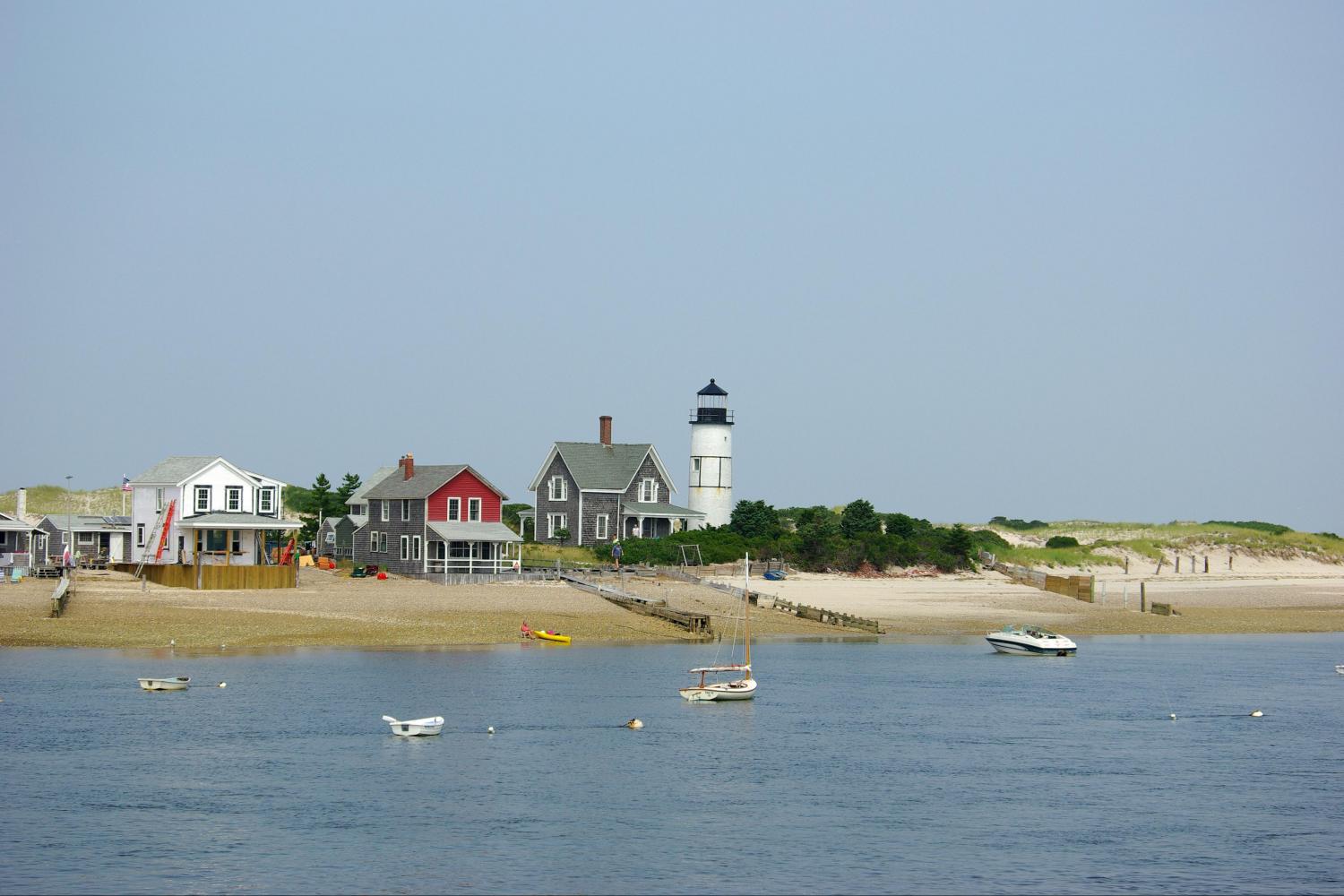
Jamie’s family had close friends who owned an original land grant farm in Cape Cod, bestowed by George III. He had worked on it for many of his adolescent summers, remembering those days fondly with their temperate days and cool nights. Since I hadn’t seen Massachusetts since age nine and Jamie was certain it would be cooler on the Cape, we thought it would be fun to drive up for a long weekend to escape the July heat.   We arranged for a friend to look after Tux and reserved a room at The Fernbrook Inn, a gorgeous Victorian bed and breakfast in Centerville.

The snag came two days before we planned to leave. We had gone out to dinner and upon exiting the Mitali West Indian restaurant on Bleecker Street in Greenwich Village discovered that Jamie’s baby blue Mercedes E class had a new paint job – a thick stripe of Metropolitan Blue running along the entire driver’s side, almost as an accent on top of the assorted scratches and the crushing indentation from tail light to head light. Although he didn’t shriek the profanities I expected him to, it was obvious that he wasn’t happy with the NYPD’s poor driving skills. But what to do about the trip? Should we cancel?

We considered the problem the rest of that night and the next morning. Neither of us wanted to postpone; NYC in July is a tourist-stuffed and aroma-infested city-sauna. A weekend away was tempting, but how would we get there?

Just after lunch, Jamie phoned me at my office with the solution; his business partner, Danny, had recently sold his house in Tuscany and had had the furnishings shipped home and among them was a BMW sedan. We were going to borrow it for the weekend.

He arrived home a few hours later looking disconcerted. I asked what was wrong. It turned out that there are different models of BMWs available in Europe than in the US. Danny had the newest, snazziest model BMW sedan; all of its controls were voice-activated.   It was the early 1990s and I had never before heard of this.

“You mean you talk to it?”

“Yeah.”

“Wow, that’s cool.” He frowned slightly. “It’s not cool?”

Jamie scratched his chin. “Oh, it’s cool, all right. What’s even cooler is that it talks back.”

“No! Really?”

“Yeah. In Italian.”

“In Italian? You don’t speak Italian,“ I observed.

“No, but Danny does and it’s his car,” he answered.

“Ohhhhhhhhh.” The complication was beginning to sink in. Fluent-in-Italian Danny wasn’t accompanying us. “Do you think we need to speak Italian? I mean, can’t we just fill up the gas tank often and presume that it’s all right?”

Jamie nodded. “We’ll have to. It’s either that or stay home and neither is us wants to do that.”

He was right – neither of us did want that. So the next morning we loaded the car and set off for Cape Cod listening to a new best seller in the CD player. The car had a lot to say but neither of us understood it so we just turned the book louder.

We arrived in early afternoon. The inn was even more beautiful than we had imagined; a Victorian house with a wide, airy porch and spectacular gardens created by Frederick Law Olmstead.  We learned from Brian, one of the owners, that while a sea captain had built it, its owners had also included Dr. Herbert Kalmus, the inventor of Technicolor. Francis Cardinal Spellman, Walt Disney, Gloria Swanson, and several American presidents had vacationed there.

As Brian showed us around, we noticed that it wasn’t very cool; in fact it was nearly as hot as Manhattan. Jamie mentioned that he had spent his adolescent summers on the Cape and it had always had great sleeping weather, cool with a light breeze. Brian nodded. “Usually,” he agreed, “but this has been the hottest summer in seventy-five years.” Jamie and I exchanged glances. “At least there’s an ocean,” I mumbled.

Brian introduced us to his partner, Sal, who had taken our bags to the Garden Cottage. We followed Sal along the pea gravel path to a tiny studio nestled within the embrace of century old trees. It was lovely – with high ceilings, a queen-sized bed, its own bathroom, and airy porch.

“It was a little stuffy in here so I have opened all of the windows for you,” Sal said, opening, then resting, the screen door against his shoulder as he handed Jamie the key to the thick oak door as he turned to leave. “You might want to leave them open. It’s been a scorcher of a summer.”

I pulled a sweatshirt from the beach bag. “Well, I guess I won’t be needing this.”

Jamie shrugged and dug in the suitcase for our swimsuits. Perhaps there would be a cooling breeze at the beach.

Later, after roasting on the beach all afternoon, we returned to the cottage to shower and find a place to eat dinner. As Jamie opened the thick door a blast of heat attacked us like from a furnace in a steel mill.

“Holy cow, it’s still like an oven in here,” I said as I dropped the beach bag.

“We’ll leave the door open when we go out for dinner,” Jamie said turning to enter the bathroom.

“We can’t!” I exclaimed, appalled.

He turned, surprised. “Why not?”

“It’s not safe. It’s like asking someone to rob us.”

“Don’t be silly. We are twenty feet from the main house in a private garden in Centerville, Massachusetts, not pitching a tent in Central Park. And we don’t have anything valuable with us anyway.” I wasn’t convinced, so when he left to put gas in the chatty Italian car, I snapped the door locked and moseyed along the path to meet him in front of the house.

It was nearly midnight when we pulled into the inn’s driveway after dinner but it felt as hot as midday in Studio City. The same blast of hot air met us as I opened the cottage door. “I thought we were going to leave the door open,” Jamie said as we entered.

“You went for gas and I forgot,” I lied. Did he think I was nuts?

“Well, we can leave it open now,” he said pulling back the white sheets and reaching for the remote control.

“You mean all night?” I squeaked.

“Sure, why not?”

“Uh, burglars, rapists, murderers, the usual suspects,” I replied snarkily.

Jamie stared. “What are you talking about? You aren’t in New York; you are in Cape Cod. It’s very safe. It’s also incredibly hot, so, please, please do not close that door. Just lock the screen door.”

Reluctantly, I agreed and crossed the room to the door. I looked at the screen door. No lock marred its smooth painted wood surface. I turned. “There is no lock,” I said.

“Sure there is; I can see it from here.”

“You mean this? This little hook and eye?” I swung the curved metal latch with my index finger. “Tux could break this.”

“What were you expecting? The door’s too thin for a Medeco dead bolt.”

“So? They have never heard of chain locks up here?”

“It’s a low crime area.”

“Humph. No place is low crime if doors are left open and everyone’s vying to be robbed. The burglars’ only dilemma is where to hit tonight.”

“Will you please stop acting like you are vacationing on Fordham Road? They don’t need security gates and dead bolts here.”

“Yeah, well.” I remain unconvinced. I wasn’t a native New Yorker for nothing.

“Yeah, well, I’m going to sleep.” Jamie rolled over and within seconds he was snoring like an asthmatic walrus.

Miffed, I sat on the bed and stared idly at a rerun of Mystery! on PBS. A crime show, great. Jeremy Brett as Sherlock Holmes was solving the mystery of the naval treaty stolen from a Foreign Office clerk. Hmm. Stolen. See? From a place that was properly locked at night; that treaty wasn’t left on a flat surface in an unsecured garden shed in a heat-ravaged coastal town just waiting to be pilfered. I gazed at Jamie sleeping and wanted to poke him awake.

I watched TV the entire night, growing more fearful with every noise I heard. Every call of a night bird became the communication of burglary accomplices. Every padding of paws under the window became a rapist in crepe-soled shoes seeking a victim. Every crunch of gravel was a car thief choosing his prey. Eventually, I nodded off, just as the ink-blue sky began its fade to grey.

Early-rising Jamie awoke with the summer sun, leaping from bed just as the robins began their dawn serenade. Grumbling I pulled the covers over my head.   “Come on,” he prodded. “Let’s go see what Sal is making for breakfast.”

“Can’t we see what Sal is making for lunch?” I grumbled.

“No lunch. B & B, you know.”

I peered out over the scalloped edge of the sheet. Jamie frowned. “What is wrong with you? Your eyes are all bloodshot. You look like you just got in after one of your grad school pub crawls.”

I scowled. I hadn’t crawled the pubs all that much at Trinity, Oxford as I completed my Masters degree; Jamie just thought I had based on who my friends and classmates were. Self-righteousness swelled within me. After all, I had stayed awake all night guarding our safety, while he slept completely unawares, snoring like a grizzly bear with post-nasal drip, and if I had felt better I would have told him so.

Truthfully, I felt like a wrung-out dishrag. Jamie could see that. He brought me a brimming mug of coffee from the dining room and held it under my nose. Eventually the scent of what my grandfather called “the hot, black elixir of life” revived me and I made it to the breakfast table where all of the other guests sat chatting brightly. No one else appeared concerned about Centerville’s propensity for nocturnal crime. Frankly, I was too tired to care about it anymore, as well. I spent the entire day dozing on the beach.When we returned to the garden cottage from dinner that night, I decided that while the hook and eye might be – was – flimsy, Brian and Sal had owned this place for years and had never had a break in; that had to count for something. I flipped the latch and got into bed. Que sera sera, as Doris Day so often sang. I imagined I’d be alive and intact in the morning. And if I was, I planned to find a Borders books; I still needed to buy an Italian-English dictionary to figure out what the car was trying to tell us before we drove back to New York.

Tuxedo on the Uptown Bus

BideaWee

Immediately after work on August 14, 1985, I walked down Park Avenue to the corner of Thirty-eighth Street. I had planned to meet my boyfriend there; we were going to walk over to the Bide-A-Wee animal shelter to adopt a kitten.

It was stifling. He was late. Neither of these was a surprise. Bored, I pulled my hair up into a ponytail and wandered along the sidewalk, dodging other sweaty New Yorkers and chewing my right thumbnail. I idly perused the display in the window of the Hallmark store. I looked at my watch several times. If he didn’t arrive soon the shelter would close and my frail wishbone of opportunity would snap.

Finally, I saw him trudging up Park Avenue South. I grabbed his arm. “Come on! Come on! They’re gong to close!”

“They’re not going to close.” He looked at his watch. A quarter to six. They were going to close. We scurried along East Thirty Eighth Street, making it in the door just before the guard lifted his key to lock it.

“I came to adopt a kitten,” I announced brightly.

“Good for you. Got lotsa kittens down there,” he answered. “Go right over there to the Adoption Office.”

While I headed to the office to complete the paperwork, Jamie followed the guard’s chin jerk and walked downstairs to the cat and kitten room. By the time I joined him, he was already stopped before a cage. Inside was a howling black and white kitten; her little paw was stuck out between the bars and she had dug her claws into his Armani suit jacket and nearly into his wrist.   He smiled goofily. “I think this one wants to come with us.”

She was tiny – a ten-week old domestic shorthair, black with white paws, a white bow on her face, and a white bib under her chin. She looked as though she was dressed for a formal occasion so we named her Tuxedo. We paid $15 for the kitten and $2.44 for a cardboard Bide-A-Wee carrier to take her home in and headed for the uptown bus.

Since we lived in a converted brownstone way up on Central Park West, we had to change for the cross-town bus near the Park. It was a long ride and the buses were like airless tin cans.  The kitten was frightened and scratched at the box trying to escape. There were no seats together so Jamie took the quivering box and sat on the left side alone. I sat on the right next to another cranky commuter.

He put the box on the floor, near his briefcase, next to his feet. The scritching noise continued. There were a few plaintive meows, barely audible over the roaring, belching bus. Then the howling began.

New Yorkers tend to ignore each other on public transportation, preferring to sit rigidly, our body language telling everyone near us that no, they don’t actually exist, after all. This bus was no different. Through the shaking and the clawing, no one turned toward Jamie. Even the stifled mewing garnered no response. But, as we were turning onto CPW and he opened the box to comfort Tuxedo, a change occurred. Her head and shoulders popped up like a jack-in-the-box toy and she yowled with relief as she scrabbled up his pant leg to sit in his lap. The entire bus all but cried in unison, “Ohhhhhhhhh! A kitten! Look, a kitten! Awwwwwwwww.” The bus nearly tilted to the left as every rider rose from the seats and reached to pet her.

I have never seen anything like it, either before or since. I have watched television stars enter restaurants and no one looked up from his entree. I saw a bride ride the subway in a big, poufy, white dress and veil and no one cracked a smile at her. But a little kitten on a hot summer day melted every heart on the bus.

Jamie tucked her back into the box so we could exit at our stop. Total strangers, adults, called after us, “’Bye, kitty.” “You take good care of that baby, now.” “Bye, you have a good night.”

Tuxedo lived with us for the next fifteen years until kidney disease struck. I think of her every day, but mostly in August, when I remember the uptown bus ride with the winsome kitten who captured the commuters’ hearts.

Rain at the Beach, 1967

image

When I was a child I spent dove-colored afternoons with my sister, sitting by her side at the kitchen table,
scrubbing Crayola colors onto the pages of a book,
careful to stay within the black lines as I made Underdog’s ears scarlet and Sweet Polly’s dress violet.

Fighting over the periwinkle,
we tore the paper wrappers to insert the nubby tips into the sharpener (“built in!”) on the back of the 64 color box.

My mother sat nearby on the scratchy brown couch,
with her legs propped on the coffee table.
Steam curled from the cup near her feet,
the fruity scent of Constant Comment filling the air as she read or poked a needle through canvas in the dim summer light.

My father snored in his leather recliner,
open book balanced on his ample stomach,
fighting World War II again in his dreams,
As the rain shushed onto the roof and puddled on the porch,
splotched the red Delta 88 convertible in the driveway,
and trickled silently into the sand.

Entering the Walkstreet

IMG_3299We had been living in Beverly Hills for three years when Jamie decided that he wanted to move. I wasn’t surprised. While appearing outwardly glamorous in some ways, it is really just an overly-populated, rich people’s small town, and to us, coming from Manhattan, it was a very small town, indeed.

Frankly, I wondered why it took him so long to grow restless. After all, we had seen designer stores before. We had seen Rolls and Bentleys before. We had seen gawking tourists before. And we had seen more movie stars in New York than we ever saw in LA. I think because he spent long weekdays at work and generally returned to New York at the weekends, he had very little time to grow bored; however, when I arrived for holidays or at the end of June and we spent every moment in a town of 5.71 square miles, it didn’t take long for us to weary of it.

One night just before Christmas, Jamie announced that he intended to begin looking for a house. Since I was in New York, he viewed the available ones with a real estate broker after work. After he had seen many and narrowed the field to four, he sent me links to the Google Earth pages so I could participate in the final decision. Benedict Canyon. Hmm. Nice but I did not drive so what was I supposed to do with myself all day besides sit alone at the pool, something I had been doing in BH for years? The same for Coldwater Canyon. Venice? Great, but was that a drug rehab clinic next door?  Oh, no, no, no, not that one. The final choice, in Santa Monica, however, was different.

The late nineteenth century house in the walkstreet was charming. Judging from the photos, it had neighbors, a park, Main Street down the hill, and the ocean two blocks away. There were coffee shops, salons, clothes stores, and a branch library. It wouldn’t matter that I didn’t drive.

Jamie had put off closing on the house until late January, just before the Oscars. I was coming to LA for the long weekend’s festivities; from the gifting suites to the Academy Awards themselves, we had a lot of time already committed, but I wanted to see the house first.

I arrived on Saturday morning. We drove the short distance from LAX to Santa Monica in a wobble of anticipation. I had been to Santa Monica before but, as we had always stayed at the beach hotels, I had no clear idea of its topography.   This time we didn’t go near Loews or Shutters or the Third Street Promenade. We didn’t even get that far. Turning off Ocean Park Boulevard, Jamie pulled into a short driveway and hopped out of the car. I followed. The air was cool and salty. I liked it already.

Jamie tapped the residents’ code into the security gate’s keypad and we entered the walkstreet. I had never seen a more charming place. Two rows of historic bungalows faced each other as the sidewalk joined the postage stamp-sized front gardens. No one was about. Heads swiveling to take it all in, we trotted up the rise to our house. It was sage-green with eggshell trim. It had wide steps and a wider wooden porch with two huge glass picture windows, one in the living room and one in the dining room. Gazing from the house to the west, I could see the Pacific from the rise of the hill. We tiptoed up the steps, excitedly, and peered in the windows. Hardwood floors, open space, a new kitchen. . . I was unbelievably excited, even more than I had been when we bought our first home together.

We stayed only a few minutes. I had hair and nail appointments to begin the long process of getting ready for the big Night Before the Oscars party at the Beverly Hills Hotel. We sauntered back along the walkstreet and re-entered the car then drove back along Ocean Park to eat a quick lunch at Jamie’s favorite burger restaurant, The Counter.

Many years later, I can still feel the excitement I felt that day as, although I didn’t know it, this day was the beginning of so many things – living near my niece, Vikki, and her cat, Finn, again; meeting Debbie and Glenn, who ultimately became among our dearest friends; learning about rats and the proximity of movie star neighbors; and, finally, finding the stray kitten who became our Spencer.

It’s often said that a life’s path is determined with a single step. I think it’s true. My Santa Monica time was among the richest and happiest of my life so far. And it started with the keypad  entry on the walkstreet.

August Magic

imageAugust is for Italy; to be precise, it is for Forte dei Marmi, a lovely beach town in Tuscany that we have gone to for years, after Jamie learned about it on a marble-buying trip.

The Forte you see depends on where you go and where you look. Ours is the sleep late and laze at the beach all day Forte as opposed to the drink and dance all night at the clubs and miss the next day Forte.

We are creatures of happy habit and have always stayed at the same hotel – Hotel Augustus, Viale Morin, 169 – and done the same thing the same way. We rise at about 9 am and wander downstairs to the garden dining room for breakfast – small Italian eggs, soft-boiled with rich, creamy, saffron-colored yolks sopped up with crispy whole grain toast and washed down with foamy, creamy, caffe latte. Sitting in the pale yellow sunshine, it appears that no day could begin any better.

We spend the day on lounges in our rented cabana, reading, chatting, snacking on fresh fruit and Pellegrino, and dozing until the inevitable telephone calls from Jamie’s office begin. After a light lunch of pizza and salad we walk to the pier and back. By then the sun has begun its descent and it is time to shower and change for dinner, a little shopping, and passeggiata, the uniquely Italian custom of walking around and looking at each other’s sartorial presentation.

We dress carefully – Italians don’t wear sneakers or fanny packs, not even on their holidays – and walk the mile into town. Sometimes it’s a slim linen dress and heels for dinner at Trattoria Gatto Nero and sometimes it’s a floaty cotton skirt and flats for pizza Margherita at Al Bocconcino. Afterward it is always gelato from Caffe Principe and a couple of laps around the entire town looking at everyone else looking at us as we work our way to the newsstand for copies of British magazines.

The nights are sultry and the salty tang of the sea floats in on the gentle ocean breeze, combining with the potpourri of aromas from the restaurants. The shops are open and crowded with festive customers until long past midnight. Snatches of music or laughter burst forth periodically from hotel lobbies and dining rooms as we wander past, hand in hand.

Finally, we turn left at the go cart track and head toward the hotel. The music is cranking up in the clubs and the high-performance cars’ engines are revving as they cruise the streets hoping for a legal parking spot. As we are now in our fifties, those days are behind us. Jamie will talk on the phone to the studio for hours, returning the calls he missed all day due to the time zone difference. I will watch an old black and white movie on the iPad and fall asleep. Tomorrow it will all begin again.